The trick is consistency, not volume. Ten minutes every day does more than an hour once a week. Below is a routine that works in most Indian homes, even when both parents are at work.
Step by step
- 1Pick a fixed time
Right after breakfast or after the afternoon nap works well. Toddlers like knowing what comes next.
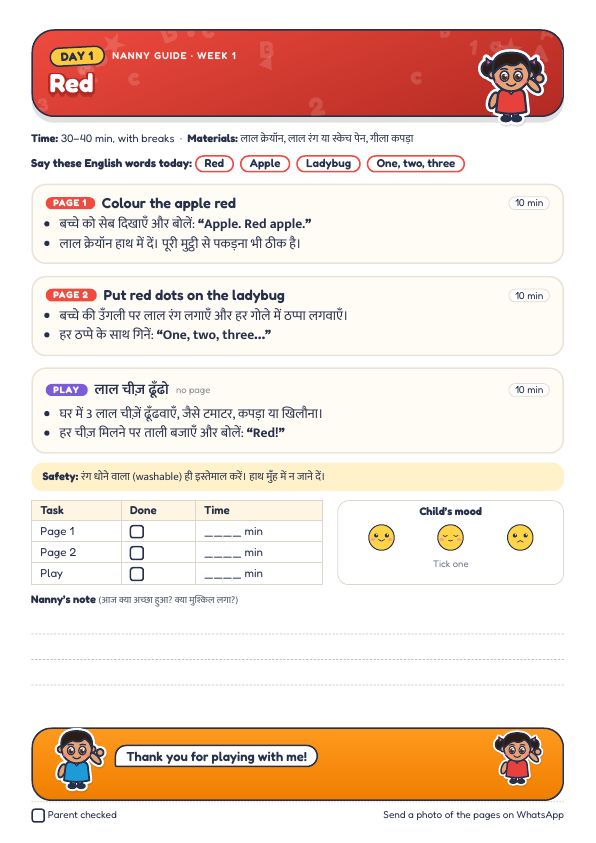
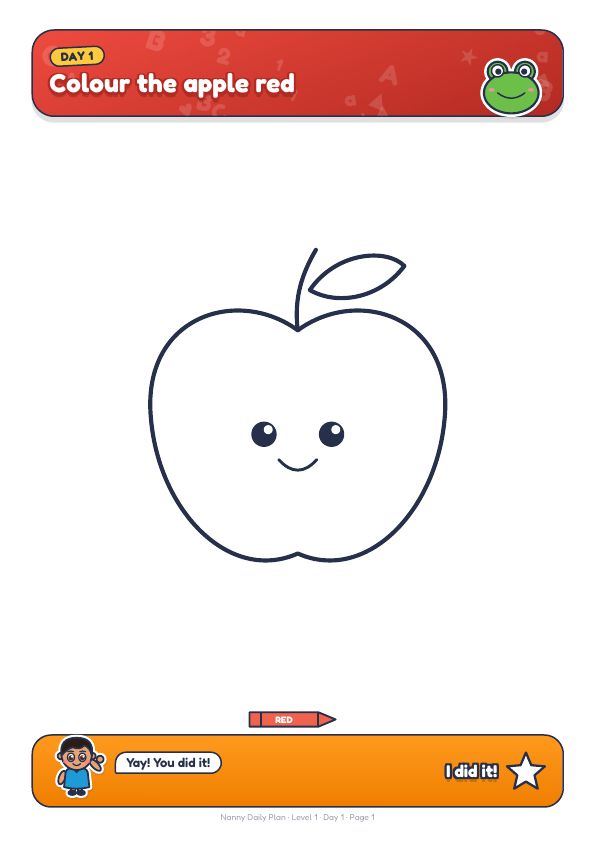
- 2One colouring or tracing page
Big pictures, thick lines and chunky crayons. Let your child hold the crayon in a fist if that is easier.
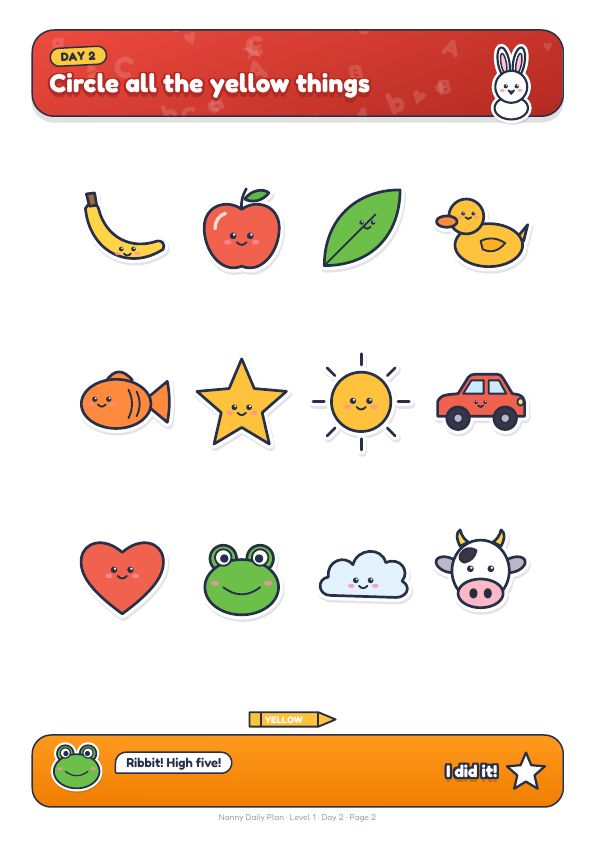
- 3One thinking page
Matching, finding, circling the big one or the odd one out. These build attention and early logic.
- 4A 10-minute play activity
Jump like a frog, sort spoons, pour water, hunt for red things. Movement fixes the new idea in the body.
- 5Say the English words
Pick 3–4 words for the day (red, apple, big) and repeat them during meals and bath time too.
- 6Celebrate and stop
Stop while your child is still enjoying it. A star sticker or a high five is enough.
See it on paper
These pages come from the TAILR Daily Workbook for Kids, a 60-day printable plan for ages 1–3.
Tips for parents and nannies
- Print one week at a time so pages stay fresh and exciting.
- Black and white printing is fine. Children enjoy adding the colour themselves.
- Keep finished pages in a folder. Children love flipping back through their work.
Questions
How many worksheets should a 2 year old do in a day?
One or two short worksheets of about 10 minutes each is plenty at this age, with play in between.
Are worksheets good for toddlers?
Yes, when they are short, playful and done with an adult. They should feel like a game, never like a test.
What if my child refuses?
Stop and try again later or tomorrow. Offer a choice between two pages so your child feels in control.